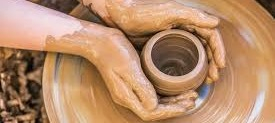
Pottery making is the art of shaping clay — a natural material known for its durability and resistance to high temperatures — into forms such as pots, jugs, vases, and flowerpots. These pieces can be molded by hand or with the help of a wheel, and are later fired in high-temperature kilns. Pottery, tiles, and similar products created through this process are widely used in architecture as decorative elements.
In Konya, Mehmet Gürpınar has been practicing pottery for 43 years, continuing his family’s long-standing tradition. In his workshop, he works to pass this craft down to future generations and teaches classes to those who want to learn.
Pottery is now considered a fading profession, and the number of master craftsmen is decreasing with each passing day. Because the process is labor-intensive and transforming clay into finished pieces takes time, many people no longer pursue this craft.
After the clay is prepared, it is shaped into slabs and placed on a pottery wheel called the “İşlek.” The potter then uses their hands to form the clay into the desired shape. Once shaped, the pieces are first dried in the sun, then in the shade, and finally fired in special kilns. Clay can be turned into many useful and decorative items such as water pitchers, cooking casseroles, and household ornaments.
Mehmet Gürpınar (52), a cultural heritage representative and state artist who learned pottery in Konya’s Doğanhisar district, said he first sat at the wheel at the age of nine and has continued the craft for 43 years. “I started this profession in Doğanhisar. It was my father’s work. I didn’t enter this profession through formal education; I grew up in it. In the past, we kneaded the clay by hand and with our feet. The machines we used were manual, but as technology developed, everything became electric,” he said.
“We now buy ready-made clay. I’ve been doing this work for 43 years. I opened my workshop in Ecdat Park four years ago and have been working here since. I have many students, most of them women, and they approach this craft with great enthusiasm. Two of my students have even opened their own workshops. I try to teach everyone who comes here to learn. I am also a cultural heritage representative and state artist, and we are doing our best to keep this profession alive,” he added.
Speaking about the significance of clay, Gürpınar said: “I used to get clay from my hometown, Doğanhisar. Why Doğanhisar? Because its red clay is famous — it keeps water very cool. I still use it for my pitchers. For my other products, I buy clay from Avanos. This is how we continue our work.”