Rugs have played an important role in textile production for centuries and remain a valued element of interior design today. The Konya region of Turkey holds a particularly rich heritage in rug weaving, shaped by generations of craftsmanship. Several towns across the region have long been recognized for producing high-quality rugs, reflecting both local identity and traditional weaving knowledge.
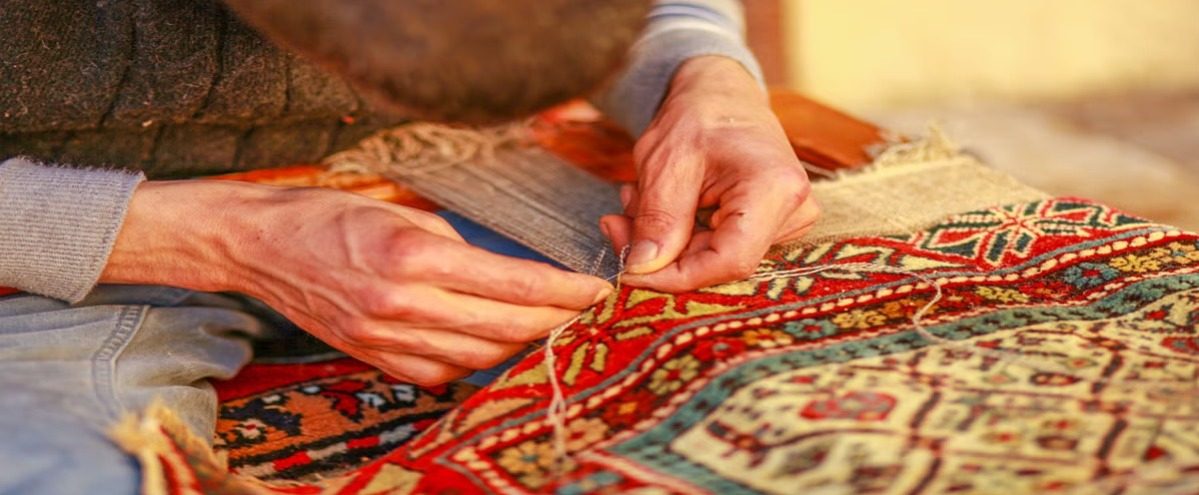
Although rug weaving is no longer as widespread as it once was, Konya’s weaving tradition is rooted in a deep historical background and a variety of techniques. Weft interlocking methods are commonly used to create striped compositions in single or multiple colors, while hooked rug techniques allow for more intricate patterns. Plain weavings in the region also feature traditional methods such as cicim, zili, and sumak, each adding texture and visual depth to the rugs.
Prayer rugs are among the most characteristic examples produced in Konya. These rugs typically feature a mihrab design oriented toward the Kaaba. Their backgrounds are carefully structured with horizontal and vertical divisions and enriched with symbolic motifs that give the rugs both spiritual and artistic meaning.
Another prominent group includes rugs decorated with medallions or central motifs. The number and arrangement of these medallions vary according to the size of the rug and are often designed in rhombus or hexagonal forms. Borders, either narrow or wide, frame the composition and emphasize the central pattern.
Konya rugs are also distinguished by their unique motifs, locally known as nakış, yanış, and oyu. Many of these designs are inspired by historical examples preserved in museums and private collections, and they continue to be reflected in contemporary rug production across the region.
In essence, Konya’s rug weaving tradition represents a strong cultural legacy. While production has declined over time, the techniques, motifs, and artistic values developed in the region continue to influence textile craftsmanship and preserve an important part of Anatolia’s cultural heritage.