
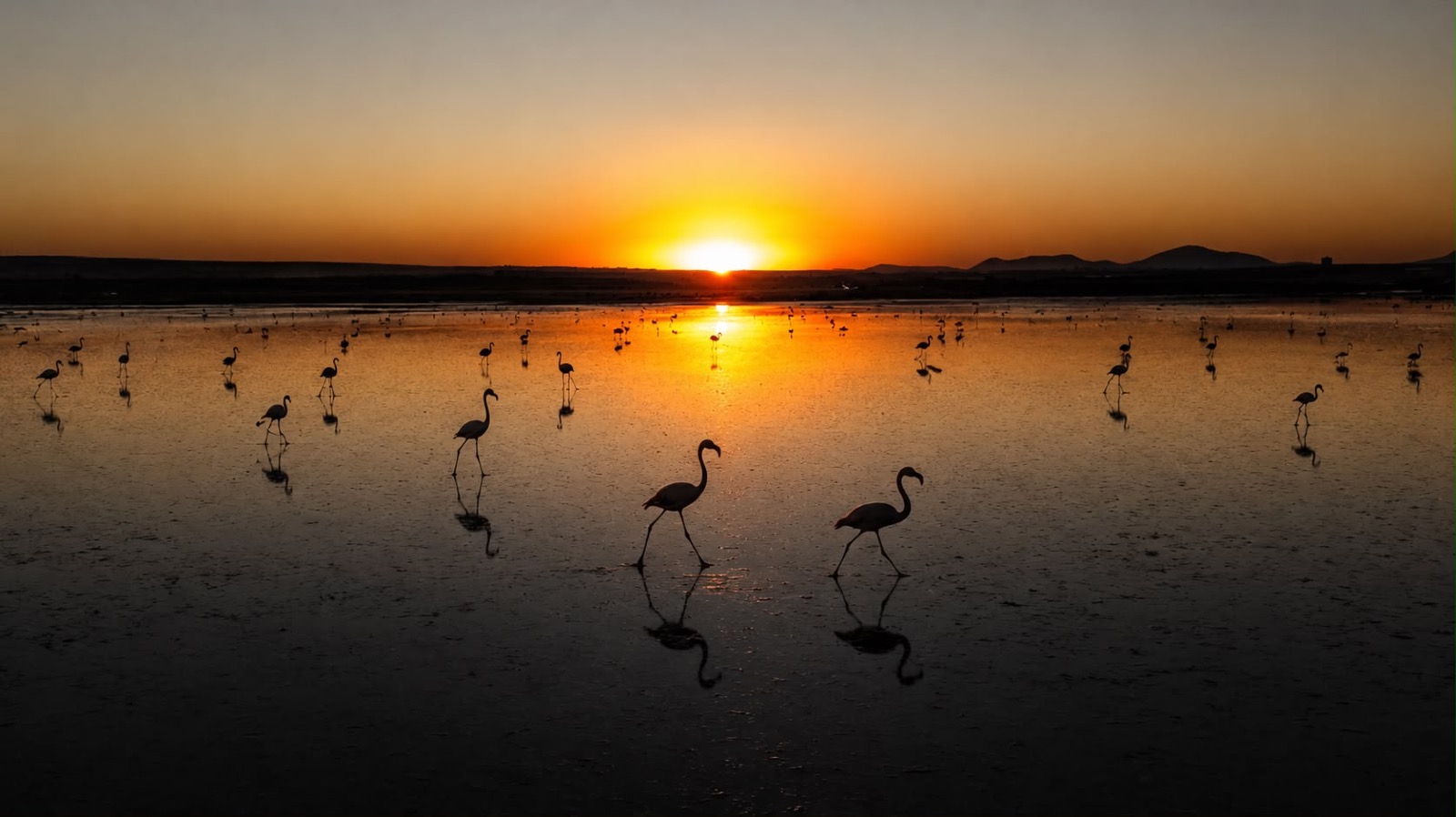
Located in the Konya Basin in Central Anatolia, Lake Tuz is one of Türkiye's largest and most ecologically significant lakes, known for its vast salt flats, striking landscapes and unique ecosystem.
As one of the world’s saltiest lakes, it serves as Türkiye’s most important breeding ground for flamingos and provides a crucial habitat for numerous bird species. During the warmer months, the lake’s distinctive landscape attracts visitors who come to witness its pink hues, expansive white salt flats and remarkable sunsets.
However, the lake’s natural beauty increasingly contrasts with the environmental challenges it faces. Situated in one of Türkiye’s driest regions, Lake Tuz receives limited rainfall and can lose almost all its surface water during the summer months.
The declining water levels have already had serious consequences for wildlife. According to Türkiye’s Ministry of Agriculture and Forestry, approximately 1,000 flamingo chicks died five years ago when insufficient water and increased salinity created unfavorable conditions for their survival.
Agricultural activities across the Konya Basin are among the major factors contributing to the lake’s vulnerability. Intensive groundwater extraction, particularly for irrigation, has placed additional pressure on already limited water resources.
Research conducted by scientists from Middle East Technical University (METU) two years ago revealed that only around 3 percent of the precipitation falling across the basin reaches Lake Tuz, highlighting the scale of the region’s water challenges.
Beyond its ecological importance, Lake Tuz also holds considerable economic value. It is Türkiye’s leading salt production center, accounting for approximately two-thirds of the country’s annual salt output. The industry provides employment for local communities and supplies salt to domestic and international markets.
Along the lake’s shores, industrial operations continue to extract salt from its extensive deposits. The harvested salt is transported to processing facilities, where it is refined and prepared for distribution.
As water resources across the Konya Basin come under increasing pressure, protecting Lake Tuz has become increasingly important not only for preserving its unique ecosystem but also for safeguarding the region’s economic and natural heritage.