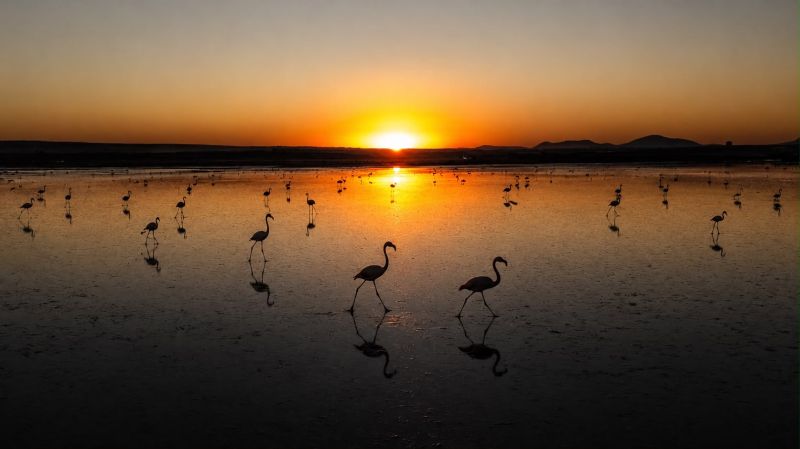
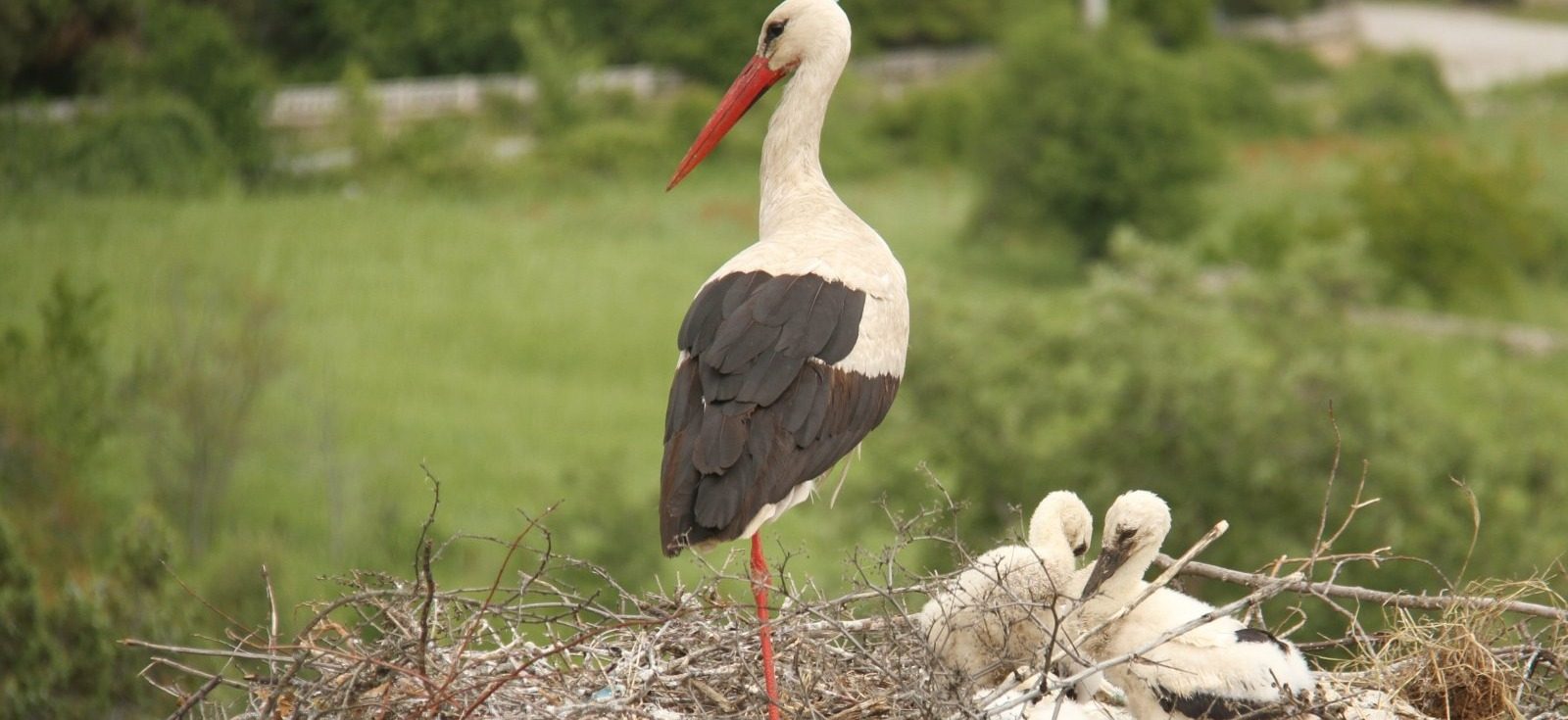
The "stork valley" situated in the Beyşehir district of Turkey's central Konya province has experienced a notable surge in its stork population this year, thanks to enhanced rainfall that has broadened the range of available food, as highlighted by a biology professor from a local university on Sunday.
Choosing to nest in the juniper trees, the community of storks arrived in the valley in early March and completed their breeding season around Beyşehir Lake National Park.
Professor Musa Dikmenli, who heads the Biology Education Department at Necmettin Erbakan University's Faculty of Education explains that the storks diligently gather sustenance from both the fields and wetlands, transporting it back to their nests.
The presence of storks was particularly noticeable in areas known as the "stork valley" and "stork hill," located around the Yeşildağ and Adaköy districts.
Storks primarily nourish their offspring from wetlands, especially those surrounding the lake.
Emphasizing that the juniper trees serve as the main sites for stork nest construction, Dikmenli pointed out that the population increase was observed following this year's overall rise in precipitation.
"Beyşehir Lake and its surroundings were severely affected by drought in previous years," he said, highlighting the storks' reliance on water sources.
"Storks primarily feed on small organisms inhabiting the water. They also quickly congregated and established their colonies and nests, thanks to the availability of more suitable nutrients. We can confidently state that there has been a significant surge in stork numbers," he explained.
Dikmenli mentioned that the "stork valley" and "stork hill" are significant habitats for stork colonies in Turkey. He further stated that this year, they observed higher numbers of storks breeding and generally laying three to four eggs.
"As the availability of nutrients increased, we witnessed a rise in stork numbers. There was also an increase in the presence of black storks, a species rarely seen in our country," he further noted.
Dikmenli highlighted that while there hasn't been a rise in the total number of birds, there has been an expansion in the variety of species observed. According to him, the growing awareness in recent years has led to the realization that refraining from interfering in the natural lives of animals actually contributes to boosting their populations.