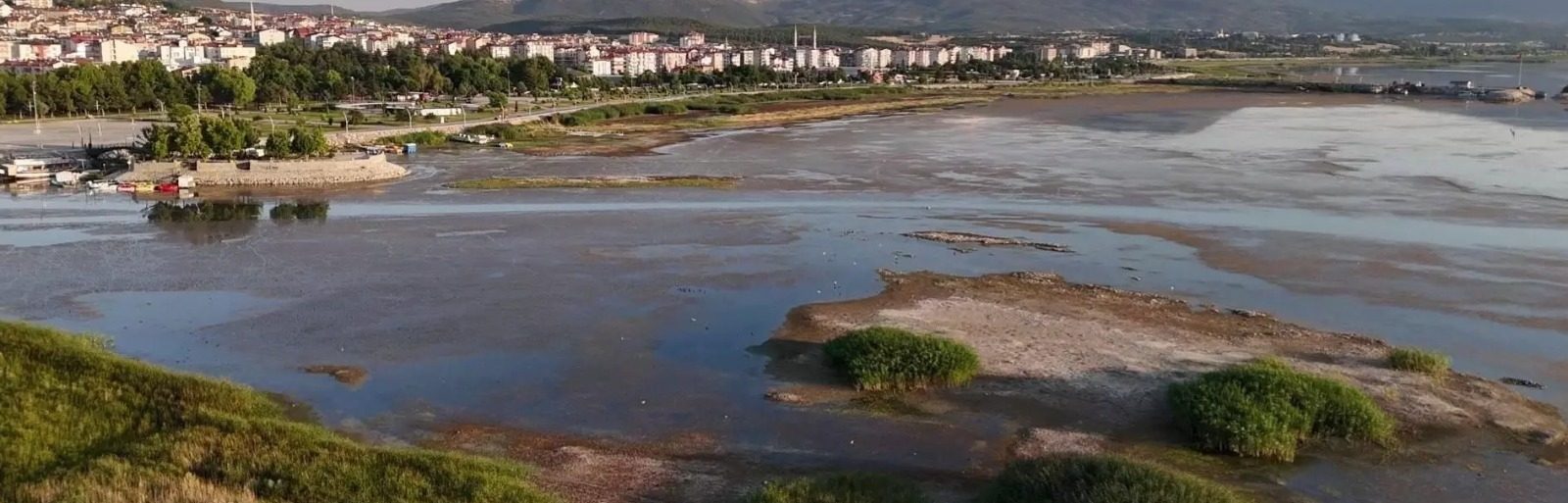
Beyşehir Lake, Turkey’s largest freshwater lake, is experiencing an unprecedented decline in water levels, with some areas receding up to 1,500 meters from the original shoreline.
Vast areas that were once open water have turned into dry land, pastures, and marshes, creating newly formed islands. Hasan Kurt, head of Beyşehir Fisheries Cooperative, described the situation as catastrophic, noting that where fishermen once operated 300 meters from the shore, they now have to walk 1,500 meters, yet there is no water.
The 656-square-kilometer lake has long supported both the irrigation of the Konya Plain through the Çarşamba Stream and the livelihoods of over 400 fishermen. Today, fishing and boat tours have nearly ceased, and grazing animals roam the dried patches of land. Kurt warned that the lake’s transformation into swamp and pasture poses a severe threat to local communities, with agriculture collapsing and even drinking water supplies expected to last only a few months. He also highlighted the imminent risk of environmental decay, including rotting mud and dead fish.
Experts and locals attribute the crisis to a combination of climate change and uncontrolled agricultural irrigation. The construction of dams and reservoirs along the lake’s feeder streams has further disrupted its natural inflow. Efforts to encourage water-saving techniques like drip irrigation have often been resisted by farmers, many of whom dismissed early warnings about the lake’s vulnerability.
The cooperative is now calling for urgent government action, proposing a project to divert water from the Akçay stream, 36 kilometers away, to replenish Beyşehir Lake. Kurt emphasized that this issue is no longer just a local problem but a national one, stating that a carefully planned and approved water transfer could save the lake.