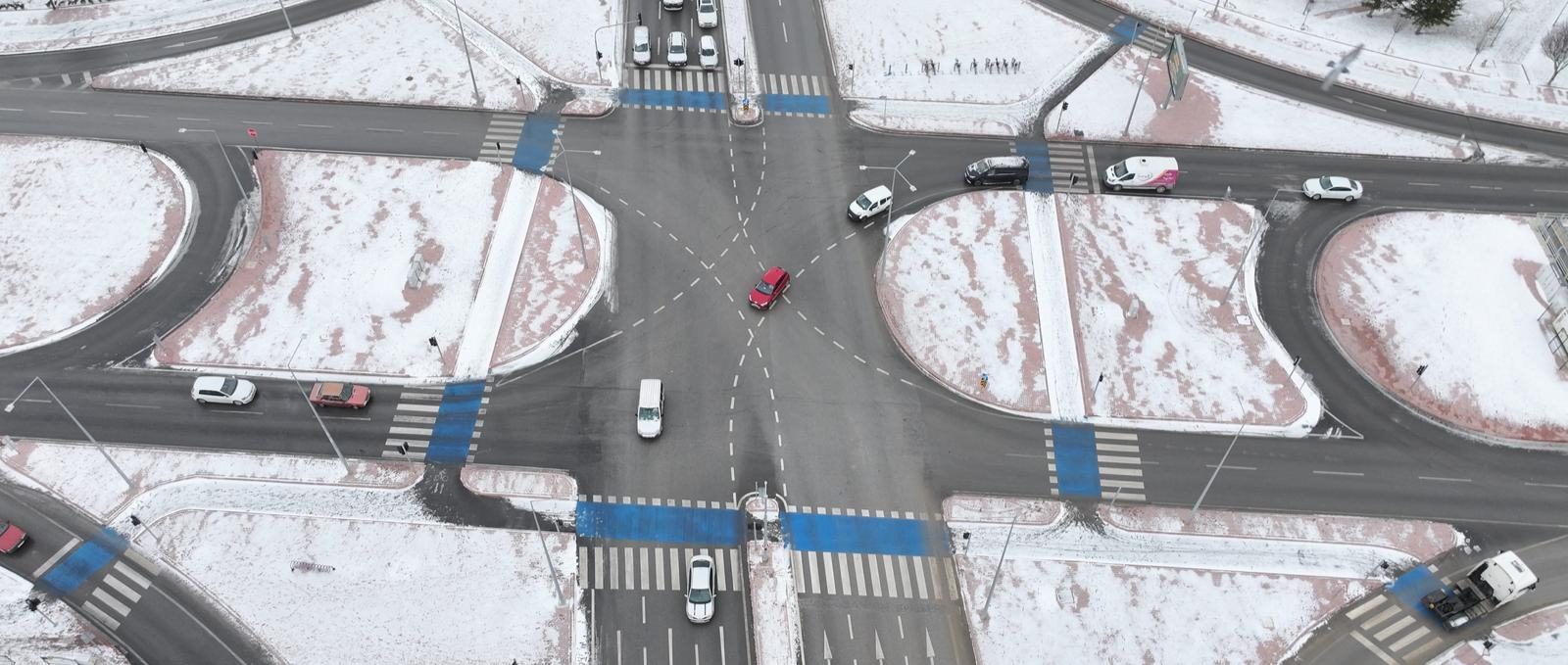
Konya Metropolitan Municipality, in line with its goals of building a sustainable and resilient city, is expanding the Smart Intersection system currently operating at various junctions in the city center. With support from a European Union–funded project, the system will be implemented at 14 additional critical intersections.
Konya Metropolitan Municipality Mayor Uğur İbrahim Altay stated that they continue to work with the goal of making Konya an environmentally conscious, smart, and livable city.
Emphasizing that reducing transport-related emissions plays a critical role in the fight against climate change, Konya Metropolitan Municipality Mayor Uğur İbrahim Altay said: “Within this framework, we had previously implemented the Smart Intersection system at various junctions in the city center. As part of the project titled ‘Smart Intersection Design for Sustainable and Resilient Cities,’ which we carried out under the authority of the Ministry of Environment, Urbanization and Climate Change in partnership with the South Central Anatolia Clean Air Center Directorate, we launched a pilot application at İhsaniye Intersection and achieved positive results. Now, by expanding this new project, we are putting it into operation at other critical intersections in the city center where traffic density is high. In this way, we aim to reduce unnecessary waiting times for vehicles, ensure fuel savings, and improve our city’s air quality.”
Stating that the project is also significant in terms of international cooperation, Konya Metropolitan Municipality Mayor Uğur İbrahim Altay said: “This European Union–funded project is also an indication that Konya is positioned among environmentally conscious and innovative cities at the international level. The grant agreement for the EU-supported project was signed on 24 December 2025, and 90 percent of the total budget of 494,260 euros is financed by the European Union. The project will be implemented over a 12-month period within the scope of the IPA III EU–Turkey Climate Change Grant Program.”
In the pilot implementation previously carried out at İhsaniye Intersection, vehicle waiting times were reduced by 44 percent, while daily CO₂ savings of 1.72 tons were achieved. With the new project, a 25 percent reduction in total greenhouse gas emissions and an approximately 30 percent decrease in vehicle waiting times are targeted.