The history of a geography is as significant as its natural riches, and its culinary culture also holds great importance. Konya is one of the rare and distinguished cities in this regard, and it has managed to carry some of its Ramadan traditions and customs down to our time.
During their transition to settled life, the Seljuks attached particular importance to kitchen and food culture. A separate section similar to today’s kitchens existed and was called aşevi, aşhane, aştaamı, aş ocağı or aşlık, later known as “mutfak” derived from “matbah.” Seljuk Palace kitchens had head chefs, and kitchens contained many utensils such as pots, ladles, mortars, plates and sieves.
The Seljuks preferred two meals a day—late morning and evening— and commonly consumed pastries with honey, molasses and grapes. When needed, sherbet, ayran and fruit were taken at midday, but during Ramadan mealtimes changed.
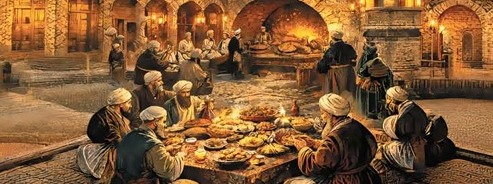
As the capital of the Anatolian Seljuks for a long period, Konya preserved many Ramadan customs and showed great reverence for the holy month. Special efforts were made so that no one suffered poverty; iftar gatherings were organized and alms were distributed carefully without distinction between Muslims and non-Muslims.
Bread consumption was central in Seljuk society, and ovens and tandoori existed widely in Anatolia. During Ramadan, strict inspections were carried out: the Muhtesib monitored flour–loaf balance and enforced cleanliness and hygiene.
During the reign of Sultan I. Gıyâseddin Keyhüsrev, it was stipulated in the Şemseddin Ebû Said Altunaba Madrasah that in Ramadan sheep should be purchased and desserts prepared. It was also stated that jurists should receive daily provisions including bread and essential support, and that tables should be set during Ramadan and feast days; bread was additionally purchased and distributed to the poor.
In the Seljuk period, it was requested that places be illuminated with candles on Ramadan evenings and on special nights such as Kandil. Records note candle ceremonies at Karatay Madrasah and Karatay Mosque on nights like Regaip, mid-Sha’ban and Laylat al-Qadr.
Sources mention breaking the fast with dates and salt, as well as various Ramadan entertainments. Turkish cuisine is regarded as one of the three richest cuisines in the world, and Konya’s culinary depth is known to date back to the Seljuks and the Oghuz Turks.
WHAT WAS EATEN AT RAMADAN IN THE SELJUK ERA
During the Seljuk period, saffron zerde rice is mentioned as a special dish served at Ramadan and religious festivals, and saffron was cultivated in Konya. Tirit was among the most popular dishes, and game birds were also consumed; honey halva is noted among desserts and was sold in markets as well as prepared at home.
Soups such as tarhana, trotter soup, cabbage soup and porridge mixed with ayran or milk were consumed. Main dishes included sheep, goat, lamb, fish and poultry; kebab, meatballs, stew and tirit were common, alongside pastırma, roasted meat and soudjouk.
On special days, dishes like herise (keşkek) and borani were served, and desserts included saffron colored zerde, peluze and rose-and-sugar gülbeşeker. Beverages included rose sherbet mentioned in Rumi’s works, sirkencübin, honey sherbet and nardenk sherbet; fruits were widely consumed as well.
Some traditions inherited from the Seljuk period continue not only in Konya but also in certain other cities. Examples include communal first-iftar gatherings in Kozluören (Bursa), the Helasa tradition in Sinop with model boats and rhymes, and musical performances at Amasya Castle.
By Mustafa Akgöl