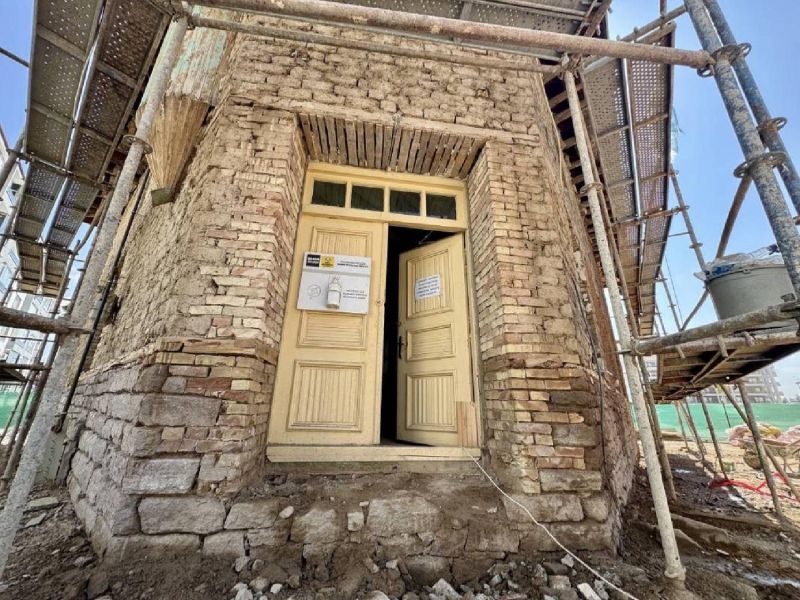

Located in Kültürpark in central Konya, the Tomb of Taj al-Vizier is a distinctive example of Seljuk-era architecture. The single-story structure has an octagonal plan, with a domed interior and a pyramidal roof covering the exterior.
The tomb is entered through a doorway on its southeastern façade. The entrance is framed by a lintel and jambs made of reused stone blocks featuring decorative details. Remains of a pointed-arch structure on the eastern side indicate that the tomb was once connected to an adjoining building.
Inside, the walls feature semi-circular niches extending from the floor to the base of the dome. The dome rests on squinches and is built of bricks arranged in a herringbone pattern. A single window on the southern wall opens toward the iwan of the adjoining structure. The lower part of the tomb is built with rubble stone, while the upper sections, including the dome and pyramidal roof, are constructed of brick.
Although the tomb does not bear an inscription, historical records in the Konya Pious Foundations archives provide information about its date and connection to the adjacent madrasa. According to a registry book, both the tomb and the madrasa were built in AH 637 (AD 1239–1240). Based on these records, the tomb is believed to have been constructed during the same period as the madrasa.