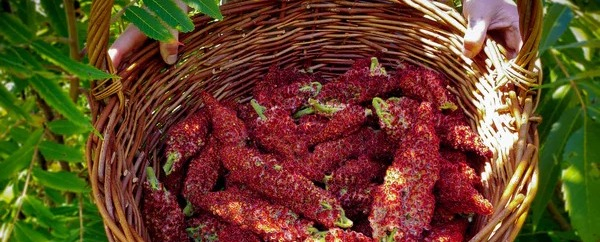
Konya is strengthening its agricultural model with a focus on water efficiency and high-value production. Konya Metropolitan Municipality has expanded its rural support programs by distributing sumac saplings to farmers across 31 districts with a 75 percent subsidy, highlighting a strategic shift toward drought-resilient crops.
Mayor Uğur İbrahim Altay stated that improving living standards in rural areas remains a core priority. He emphasized that supporting farmers is not limited to traditional crops but increasingly includes products that require less water while generating higher income per unit area. According to Altay, sumac stands out as a sustainable alternative, particularly for sloped and water-scarce lands.
Classified among medicinal and aromatic plants, sumac is a perennial species known for its adaptability. It thrives in rocky forested areas and sun-exposed limestone soils with minimal irrigation. Beyond its economic value as one of Türkiye’s most widely used spices, it also contributes to environmental protection. Its deep and powerful taproot system helps prevent erosion, maintaining soil stability even during prolonged dry periods.
By investing in crops that conserve water and offer multiple areas of use—from spice production to natural dyeing and animal feed—Konya continues to support a farming approach that balances economic return with environmental resilience.